Côte de Jubilee Tower
The only Lancashire climb named in the official announcement, and the first of the day's five. If you want to see the riders rather than glimpse them, come here.
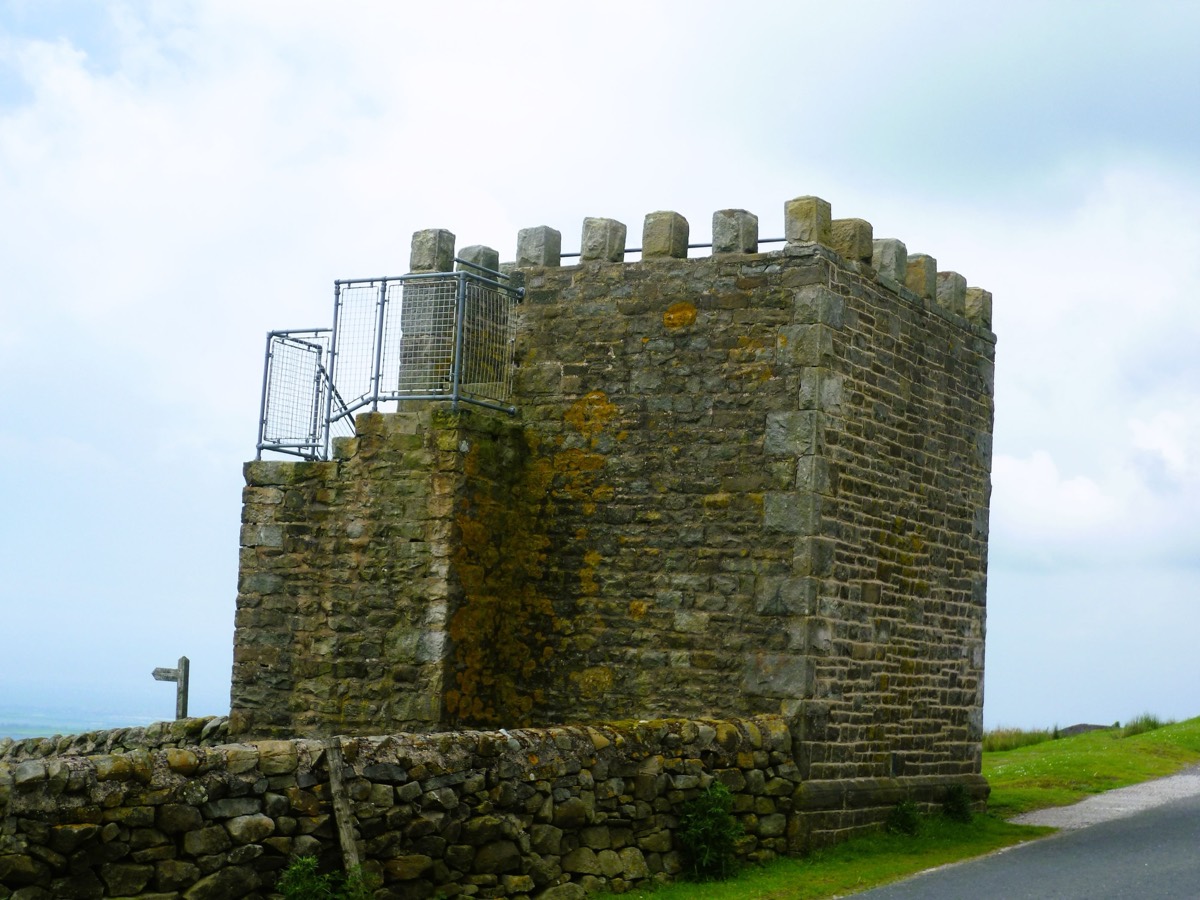
Of everything on the Lancashire section, this is the piece with the firmest official footing. The Grand Départ GB announcement names the Côte de Jubilee Tower directly as the stage's first categorised climb, rising onto the moors above Lancaster towards the stone tower that gives it its name. The other four categorised ascents are described only as being on the edge of the Pennines.
Climbs are where roadside spectating actually works. The riders are slowest, the road is usually narrower, the crowd noise funnels, and a group that flashes past a flat seafront in four seconds takes long enough here to pick out individual faces. It is also where the race is decided, because these are the points that count towards the polka-dot jersey.
Treat it as a hill day, not a roadside stop. There is no shelter to speak of on open moorland, the approach roads are narrow and will close early, and the sensible plan is to park well back in Lancaster or Quernmore and walk up in the morning with everything you need for the day. Clougha Pike, the moorland walk above the climb, is there if you arrive with hours to spare, which you should.
Nearby
- Sweeping views over Morecambe Bay and the Lakeland fells
- Clougha Pike moorland walking directly above the climb
- Lancaster and Williamson Park a short distance below
What is not confirmed
- The exact roads through Côte de Jubilee Tower
- Road closure times, and when they reopen
- Official fan zones, parking and park-and-ride
- The timetable for the caravan and the peloton
The organisers, the police and the local councils publish these closer to the race. This page says what is known and nothing more.
Plan the day around Côte de Jubilee Tower
The full corridor, the practical guidance for race day, and where to put your head down afterwards.